


You can choose wholesale candle holders with confidence by using five rules: material, size and candle fit, design appeal, safety compliance, and cost and supplier evaluation. That one sentence gives you the whole framework. Store owners often face too many choices and unclear trade-offs in the candle and holder category. This guide gives you a practical, no-jargon checklist you can use with any supplier. You will learn how to match holders to your candles, compare quotes fairly, and check safety details. Retailers who follow these steps avoid costly guesswork. Use the checklist with every supplier you contact, and your buying decisions become faster and more consistent.
Key Takeaways
- Begin with your candles: measure the diameter, height, and weight to make sure they fit properly.
- Check each holder’s stability by pressing its base on a flat surface. This helps prevent tipping.
- Before you buy, check safety features such as heat-resistant materials and proper socket depth.
- Order samples and compare suppliers side by side to check quality and fit.
- Plan your display area and measure your shelves so they do not get too crowded.
Five Criteria to Choose Wholesale Candle Holders
Go through five criteria in a set order: material, size and candle fit, design, safety, and cost and supplier. This order keeps your choices organized. Fit and stability come first. After that, height, material, and design shape the look. Each criterion has its own section below, so use this page as your map for the candle and holder category.
Start With the Candle and Display
Start with the candle itself. Measure the diameter, height, and weight of the candles you plan to stock. Then check the support or socket sizes on each holder. A piece that looks right on a shelf can still fail if your candles wobble or sit too deep. Stability matters just as much as fit. Set the sample on a flat surface and press the base gently. A wide, heavy base resists tipping. Holders with a narrow base suit a crowded shelf. Wider pieces anchor a console or sideboard.
Your display space sets the second limit. Measure the shelf depth and the tabletop area before you compare styles. Grouped arrangements need breathing room between pieces. Sketch the layout on paper first. This step saves you from ordering holders that crowd each other.
Balance Cost, Safety, and Sellability
Price is one input, not the whole decision. A low unit cost means little if a holder tips, scratches, or arrives damaged. Holders that wobble cost you returns and damage trust. Check safety features before you compare quotes. Look for a stable base, heat-resistant materials, and proper socket depth. Ask suppliers for documentation on materials and intended use.
Sellability ties the criteria together for the candles and holders you carry. Retailers buying wholesale candles and holders need pieces that photograph well and suit multiple seasons. Test a sample beside your existing candles and holders. Compare leading wholesale candle and holder suppliers on the same terms. Test the fit with your candles before you commit. A versatile design earns its shelf space back faster. Weigh cost against safety and sellability together, and you avoid false savings.
Material and Finish for Candles and Holders
Glass, Metal, Wood, and Ceramic Compared
Every material has a purpose on your shelf. Glass lets you see the flame and works well for decorative glass holders on open shelves. Thick glass handles heat well and feels solid. Metal gives you slim shapes and clean lines for modern displays. Wood adds warmth and fits naturally with rustic mixes. Ceramic holds color and patterns easily, so it works well for themed sets.
Weight and durability help you decide. Heavier holders made of stone, brass, or thick glass feel more high-end to shoppers. Lighter pieces work well on high shelves and are easy to move around. Match each material to where it will go, and your selection will cover more display styles.
Finish, Stone Variation, and Care Instructions
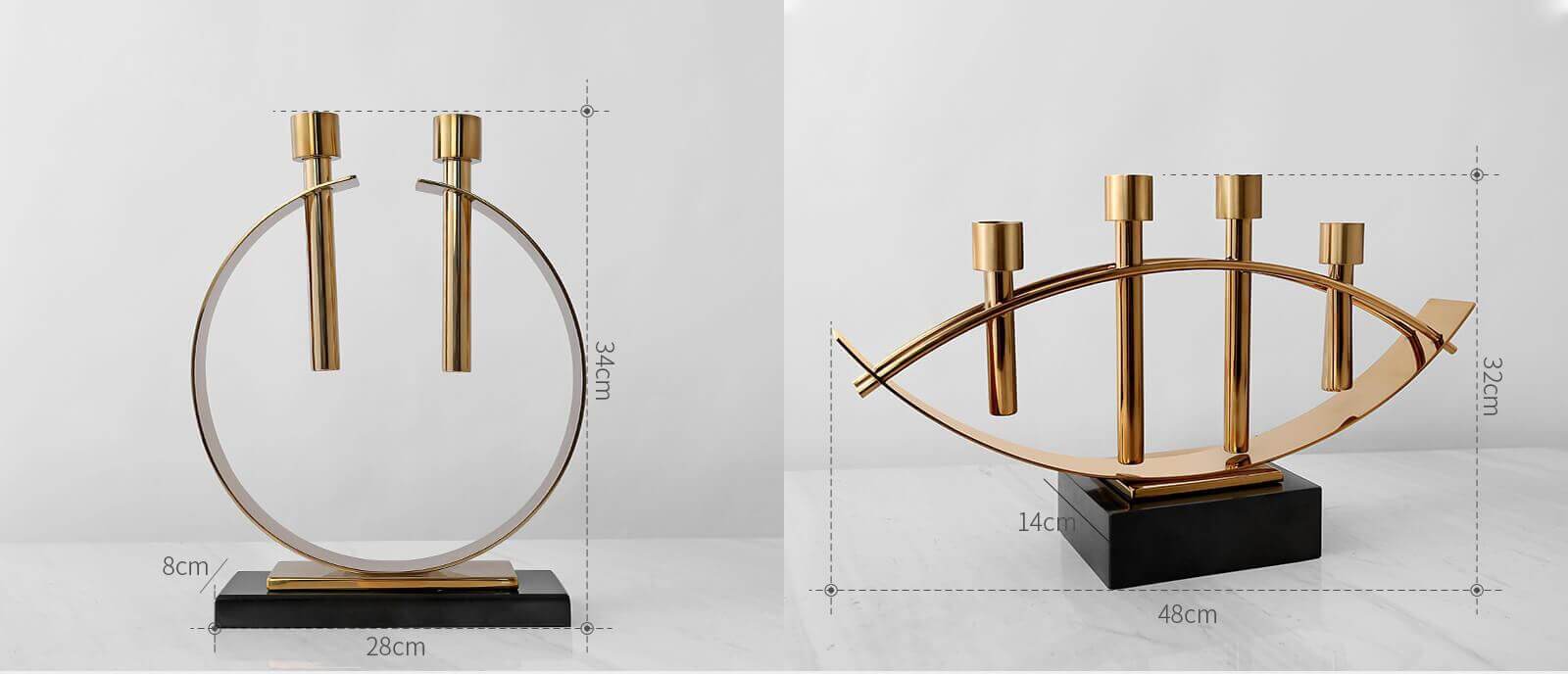
Finish needs a close look. Take Top Sicher SJ030262SL, a stainless steel and marble piece in gold color. Ask for the exact finish details, because “gold” tells you how it looks, not how it was made. Check warm and cool metallic tones under your store lighting before you approve a batch.
Stone has natural differences. Ask suppliers for sample photos of the batch they plan to send, then set clear expectations with your team. Get care instructions you can give to customers, including how to clean the piece and any limits for the finish and stone parts. These details protect product quality and customer trust across your candle and holder range.
Size and Candle Fit for Candles and Holders
Overall Dimensions vs. Candle Support
Two sets of numbers decide whether a piece works for you. Overall height shows how the piece looks on a shelf. Candle support or socket dimensions confirm candle compatibility. You need both before you commit.
Send your supplier the candle type, diameter, height, and weight you plan to stock. Ask for the support or socket measurements and the manufacturer’s intended-use instructions. Flameless candles need extra detail. Include the base dimensions and check access to the switch or battery compartment. Product names such as “candlestick” cover many designs, so request a close-up photo or dimensioned drawing of the support area. Then test the sample with the actual candles you will sell.
The same logic applies to wholesale candle jars that rest in or on a holder. Share the jar shape and size with your supplier, and confirm lid compatibility if the jar sits deep in a cup. A wide jar may not seat properly in a narrow socket. Measure first, and you avoid a mismatch across your candle and holder range.
Size labels alone can mislead you. Top Sicher’s SJ030262SL comes in two listed options. The S measures 280 x 80 x 340 mm. The L measures 480 x 140 x 320 mm. The L is wider and lower than the S. The letters do not describe every difference between the versions, so always read the full dimensions.
| Option | Dimensions (mm) | Key Difference |
| S | 280 x 80 x 340 | Narrower and taller |
| L | 480 x 140 x 320 | Wider and lower |
Shelf Footprint and Arrangement Planning
Footprint drives your display plan. Compare each holder’s length and width with your shelf or tabletop depth. A deep console absorbs a wide base with ease. A shallow shelf needs a narrower profile. Measure the space before you shortlist styles.
Grouped arrangements need a layout on paper. Place the holders, jars, and candles in the planned positions. Check the gaps between pieces and the clearance at the shelf edge. Photograph the mock display, then set quantities from that layout. This step helps retailers avoid overordering and crowded shelves.
Order samples and run this check with two or three suppliers side by side. Confirm the support dimensions in writing, then compare the full measurements against your display space. The right candle holders fit your candles and your shelves at the same time.
Design That Sells Wholesale Candles and Holders
Trends, Timeless Styles, and Versatility
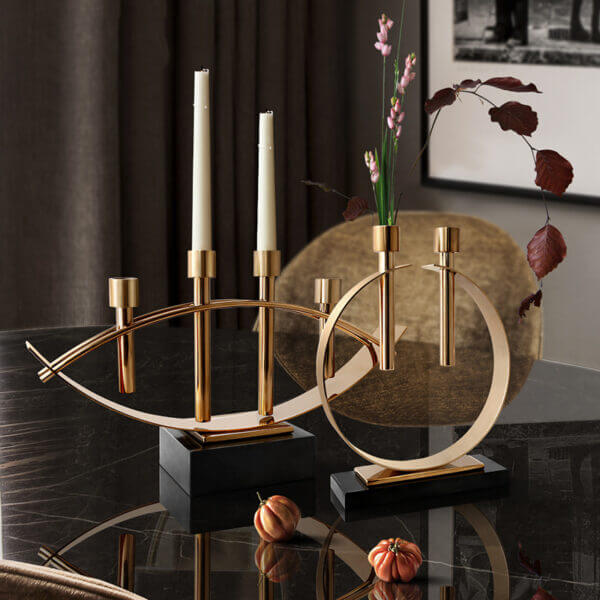
Trends change quickly, but classic styles keep their value over time. Stock a mix of both. A bold sculptural shape may grab attention this season. A simple, clean silhouette sells for years. Choose versatile designs that work across multiple seasons. A neutral finish pairs well with spring pastels and winter reds alike. That flexibility keeps your wholesale candle and holder range productive.
Test a sample next to your existing trays, vases, and accessories. Place the piece in a real display and photograph it. Review the photo before you commit to a larger assortment. The camera reveals scale problems that your eye forgives in the moment. A holder that looks balanced on the shelf will photograph well for your marketing too.
Building Coordinated Displays
Buyers tend to build room-setting displays. They picture the full scene, not a single item. Coordinated candle and holder assortments sell well for this reason. Pair candle holders with matching trays and vases, and shoppers see a complete look. Offer coordinated candle and holder assortments across a few settings, such as a console, a sideboard, and an open shelf.
Seasonal refreshes stretch your core range. Change the surrounding colors, signage, or packaged accessories. Keep the holder itself in the core range. This approach lets retailers refresh a display using stock they already carry. Add wholesale candle jars to the same scene, and the setting feels complete. Group holders with jars in warm tones for one season, then swap in cooler accents.
Ask suppliers for finish references before you combine pieces. Confirm that the holders, jars, and accessories share a consistent tone under your store lighting. Photograph each proposed setting, then approve the assortment. This habit keeps your candle and holder displays cohesive. It also gives your team a clear reference for restocking. Strong displays move candles faster, and your holders earn repeat orders.
Safety Checks for Wholesale Candle Jars and Holders
Fire-Safety Features to Verify
Safety begins with the base. Place each sample on a flat surface and press down on one edge. A steady base stays flat and does not tip over. A narrow or uneven base can cause accidents on a busy shelf. Next, check the material. Heat-resistant glass, metal, and ceramic handle warmth well. Thin or untreated materials may crack or change color over time. Ask your suppliers to confirm how well each material handles heat.
Socket depth needs just as much attention. A socket that is too shallow lets candles lean. A socket that is too deep hides the flame and traps heat. Test the fit with the actual candles you plan to stock. Confirm the manufacturer’s instructions for how the complete arrangement should be used. Apply the same checks to wholesale candle jars and containers that go with holders. A jar that sits unsteady in a cup creates the same risk as a loose candle.
Certifications and Supplier Documentation
Paperwork supports every safety claim. Ask candle jar suppliers and holder vendors for material certifications and test reports. Request the manufacturer’s instructions for intended use in writing. These documents tell you how the product performs in normal use. They also give your team a reference for customer questions.
Keep the approved documents with your sample records. Review them again when you reorder, since specifications can change between batches. For wholesale candle jars, confirm the glass rating and any temperature limits. Check lid compatibility when a jar pairs with a holder or a display set. Ask whether the lid seals properly and whether the jar ships with a matching cover.
Extend the same review to glass containers used as candle vessels. Confirm wall thickness and heat tolerance with the supplier. Retailers who document these details answer customer questions with confidence. Strong records also protect your store if a shopper reports a problem. Build this paperwork step into every order across your candle and holder range, and safety becomes routine rather than an afterthought.
Cost and Suppliers When Retailers Buy Wholesale Candles and Holders
Pricing, MOQs, and Quote Details
A full quote request makes every comparison faster. Send the model number, dimensions, finish reference, quantity per option, delivery destination, and target arrival date. Add your candle sizes and any packaging requests. This one message lets wholesale suppliers price your order without back-and-forth emails.
Ask four questions with every inquiry. First, request current stock levels. Second, confirm sample availability. Third, ask for minimum order quantities per SKU. Fourth, check whether different sizes count toward one minimum. Some suppliers offer low minimum order quantities on new styles, which helps you test a design before a large commitment. Confirm whether the quoted lead time covers production only or includes transport. Compare quotes on the same shipping basis, and record packing requirements in writing. A clear per-unit cost means little without these details.
Samples, Packaging, and Reorders
Order samples before you commit. Run a short checklist on each piece. Measure the actual dimensions against the quoted drawing. Inspect edges and joints. Check finish consistency across the samples you receive. Test base stability on a flat surface. Confirm candle compatibility with your chosen stock. Record every result and keep the approved sample as your reference.
Packaging protects your margin. Request photos of the inner packaging and the shipping carton. Ask for units per carton, carton dimensions, and gross weight. These figures let you estimate freight and warehouse space. State retail box or label needs in the first inquiry, since glass packaging and printed boxes change the quote. If you plan to pair holders with wholesale candle jars, confirm how the jars ship and whether lids arrive separately.
For core styles, ask about reorder availability and expected finish variation between batches. Retailers who buy wholesale candles and holders repeatedly need consistent color and scale. Save the approved sample and written specifications for every reorder.
When you choose wholesale candle holders, treat the sample review as your final gate. Retailers buy wholesale candles and holders from several sources, so compare two or three shortlisted suppliers side by side. Test the holders with your candles and jars in a real display. Photograph the arrangement, then approve quantities. Buying wholesale rewards preparation. Browse the candle and holder catalog with your measurements in hand, and ask each supplier the same questions. Compare leading wholesale candle and holder suppliers on identical terms, and the right partner becomes obvious.
You now have a clear plan for the candle and holder category. Use five checks in order: material and finish, size and candle fit, design and assortment, safety checks, and cost and supplier. The right candle holders pass all five for your candles and display space, not just price or trend.
Order samples before you pick wholesale candle holders. Test each piece with your candles and jars. Compare two or three shortlisted suppliers side by side. Retailers who buy wholesale candles and holders this way avoid returns. This habit pays off across wholesale candle jars, candles, and holder sets. Holders and jars earn repeat orders when candle and holder displays fit well.
FAQ
Which measurements should I request for a wholesale candle holder?
Ask for the overall length, width, and height. Also ask for the base footprint and the usable socket dimensions. Send your candle diameter, height, and weight so the supplier can confirm the fit. For flameless candles, include base dimensions and switch access. These numbers help you choose wholesale candle holders that fit your candles and shelves.
How do I compare two sizes of the same holder?
Read the full dimensions, not the size labels. Top Sicher SJ030262SL comes in S at 280 x 80 x 340 mm and L at 480 x 140 x 320 mm. The L is wider and lower. Test a sample with your candles, then match the footprint to your display depth.
Can I order matching trays and vases for a coordinated set?
Yes. Share the styles you want to combine. Ask for finish references and individual dimensions. Look at samples together under your store lighting before you approve the assortment. Retailers who build room settings sell more candles and holders as complete looks. Coordinated sets also photograph well for marketing.
How should I plan packaging for jars and holders?
Ask for photos of inner packaging and shipping cartons. Confirm units per carton, carton dimensions, and gross weight. State retail box or label needs in your first inquiry. For wholesale candle jars, ask how lids ship and check lid compatibility with each holder. Good packing protects glass containers and finished surfaces in transit.
What should I check before reordering core styles?
Keep the approved sample, written specifications, and photos on file. Ask about reorder availability and expected finish variation between batches. Test new arrivals against the saved sample. Retailers who track these details keep candle and holder displays consistent. Their jars and candles also stay matched across seasons.